
The digital marketing landscape is evolving faster than ever. Traditional strategies like Search Engine Optimization (SEO) are no longer enough on their own. With the rise of Artificial Intelligence (AI), marketers must adopt new approaches to remain competitive. Concepts like Artificial Intelligence Optimization (AIO), Answer Engine Optimization (AEO), Generative Engine Optimization (GEO), and Search Experience Optimization (SXO) are becoming essential tools. This article explains these strategies and how they shape the future of digital marketing.
SEO: The Traditional Foundation
What is Traditional SEO?
Traditional SEO refers to the standard methods used to optimize websites for search engines like Google, Bing, or Yahoo. The main goal is to improve organic search rankings so that a website gets more unpaid traffic. Unlike newer approaches like AIO (Artificial Intelligence Optimization) or GEO (Generative Engine Optimization), traditional SEO focuses mainly on search engine algorithms, keywords, backlinks, and technical improvements.
It is called “traditional” because it has been the foundation of digital marketing for years, and even today, it remains highly important for online visibility.
Types of Traditional SEO
Traditional SEO is generally divided into three main types:
1. On-Page SEO
On-page SEO focuses on the elements within a website that can be optimized. This ensures that search engines can properly understand and rank your content.
Key factors include:
- Using relevant keywords naturally in titles, headings, and content.
- Writing high-quality, valuable, and original content.
- Optimizing meta tags, images, and internal links.
- Improving user experience through mobile-friendly design and fast loading speed.
2. Off-Page SEO
Off-page SEO deals with activities that happen outside your website but impact its authority and ranking. The main aim is to build trust and reputation.
Key factors include:
- Earning high-quality backlinks from reputable sites.
- Building brand awareness through social media marketing.
- Encouraging online reviews, mentions, and influencer collaborations.
- Guest posting on relevant platforms to increase visibility.
3. Technical SEO
Technical SEO focuses on improving the backend and structure of a website so that search engines can crawl and index it effectively.
Key factors include:
- Ensuring website speed and mobile responsiveness.
- Creating and submitting an XML sitemap.
- Using structured data (schema markup).
- Fixing broken links, duplicate content, and crawl errors.
- Setting up secure HTTPS protocols.
Why Traditional SEO Still Matters
Even though AI-driven search is evolving, traditional SEO is still the foundation of digital visibility. Without proper on-page, off-page, and technical optimization, it is difficult for a website to rank well, attract users, or even appear in AI-driven results.
AIO: Artificial Intelligence Optimization
What is AIO?
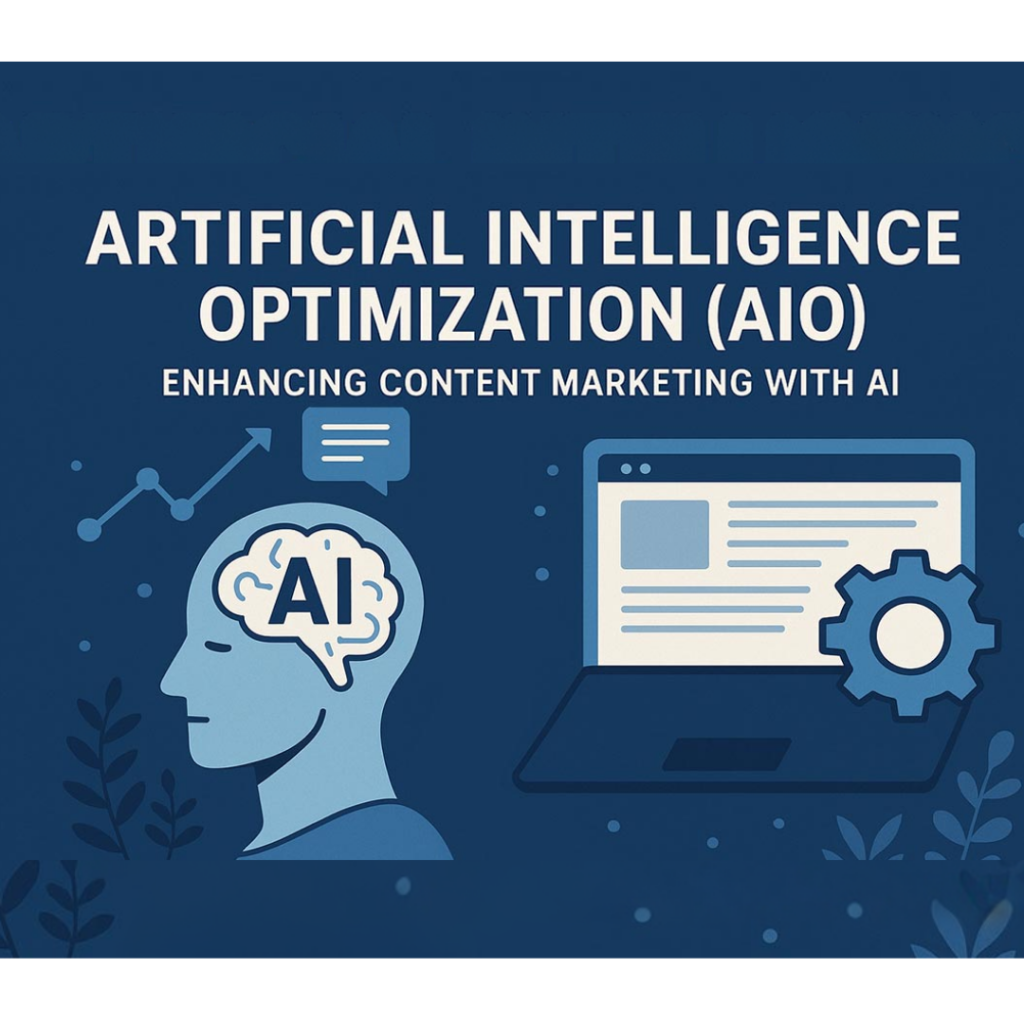
AIO stands for Artificial Intelligence Optimization.
It focuses on making content easy for AI systems to understand, trust, and recommend.
Unlike traditional SEO (which targets search engines), AIO targets:
- AI search results
- Answer engines
- Voice search
- Conversational AI tools
In simple words:
AIO = Optimizing content for AI, not just keywords.
How AI Works
Artificial Intelligence works by analyzing data, learning from it, and making intelligent decisions without human intervention. It continuously improves its performance by recognizing patterns and adapting to new information.
1. Data Collection
AI systems gather large amounts of data from various sources such as text, images, videos, and user behavior. This data forms the foundation for training AI models.
2. Data Processing
The collected data is cleaned and organized so machines can understand it properly. Accurate data processing helps AI deliver reliable results.
3. Learning from Algorithms
AI uses machine learning algorithms to study data and learn from experience. With more data, these algorithms become smarter and more efficient.
4. Pattern Recognition
AI identifies patterns, trends, and connections within the data. This enables it to predict outcomes and understand complex information.
5. Decision Making
Based on learned patterns, AI makes decisions or provides recommendations automatically. These decisions improve through continuous learning.
6. Continuous Improvement
AI systems update themselves using new data and feedback. This allows AI to stay accurate, relevant, and up to date over time.
Why AIO Matters
Competitive edge: Early adoption of AIO can give businesses a strong advantage.
AI-driven search is the future: More people will rely on AI summaries instead of browsing multiple websites.
Better visibility: Being featured in AI responses increases your brand’s reach.
AEO: Answer Engine Optimization
What is AEO (Answer Engine Optimization)?
Answer Engine Optimization (AEO) is the process of optimizing digital content so that it directly answers user questions in a clear and concise way. Instead of just focusing on ranking in traditional search results, AEO aims to make content more suitable for answer engines like Google’s featured snippets, voice assistants (Alexa, Siri), and AI-powered tools that deliver direct responses.
In short, AEO is about helping search engines and AI quickly find, understand, and present your content as the best possible answer to user queries.
How AEO Works
AEO focuses on providing structured, accurate, and easy-to-read content that matches user intent. Here’s how it typically works:
- Identify User Questions
- Research common questions people ask in your niche.
- Tools like “People Also Ask” and AnswerThePublic can help.
- Write Clear Answers
- Provide direct, simple, and short answers to each query.
- Use a conversational tone, especially for voice search.
- Use Structured Formats
- Organize content with headings, FAQs, bullet points, and tables.
- Apply schema markup so search engines understand the context.
- Focus on Voice Search
- Voice assistants rely heavily on AEO because people speak queries differently than they type.
- Example: instead of “weather Delhi,” a voice user might ask, “What’s the weather like in Delhi today?”
- Prioritize Trust and Authority
- Google and other engines prefer accurate, authoritative sources.
- Adding references, stats, and expertise improves chances of being picked.
GEO: Generative Engine Optimization

What is GEO?
GEO (Generative Engine Optimization) is the process of optimizing content for AI-driven generative search engines like Google’s Search Generative Experience (SGE), ChatGPT, Perplexity AI, and Gemini. Unlike traditional SEO, which focuses on ranking websites on search engine results pages (SERPs), GEO focuses on making content discoverable and usable by AI systems that generate answers for users.
In other words, GEO ensures that your website or content can be cited and referenced when AI tools provide summarized, conversational answers to queries.
How GEO Works
GEO works by aligning your content with how AI models analyze, understand, and present information. Here’s how it typically functions:
1. Create High-Quality, In-Depth Content
Generative engines prefer content that is comprehensive and detailed. Cover topics thoroughly, include subtopics, examples, and actionable insights to increase the likelihood of being cited.
2. Semantic and Contextual Optimization
Instead of focusing only on keywords, GEO uses semantic SEO, which includes related terms, synonyms, and concepts. This helps AI understand the broader context of your content.
3. Structured Data and Formatting
Using structured data, headings, bullet points, FAQs, and tables helps AI extract information efficiently. Schema markup, for example, signals to AI which parts of your content are facts, definitions, or answers.
4. Build Authority and Credibility
AI-driven engines prioritize trustworthy and authoritative sources. Adding references, statistics, and expert insights improves the chances your content will be used in AI-generated answers.
5. Answer-Driven and Conversational Style
Since generative AI outputs concise, conversational answers, your content should be direct, clear, and user-focused. Use short paragraphs, Q&A formats, and step-by-step explanations.
Why GEO Matters
Enhanced User Experience: Aligns content with how users consume information through AI.
AI Visibility: Increases the chance your content is referenced in AI-generated summaries.
Brand Credibility: Being cited by AI systems enhances trust and authority.
Future-Ready SEO: Prepares your content for AI-driven search trends.
SXO: Search Experience Optimization

What is SXO?
SXO (Search Experience Optimization) is an advanced approach in digital marketing that combines SEO (Search Engine Optimization) with User Experience (UX) design. While SEO focuses on improving rankings in search engines, SXO focuses on optimizing the overall experience of users when they visit your website after clicking on search results.
The goal of SXO is to not only attract users through search engines but also engage them, reduce bounce rates, and increase conversions by offering a smooth and satisfying experience.
How SXO Works
SXO works by ensuring that every interaction a user has on your website is optimized for both search engines and human experience. Here’s how it typically functions:
1. Website Structure and Navigation
- Organize pages logically so users can find information quickly.
- Use clear menus, internal linking, and breadcrumbs to improve navigation.
- Make the website crawlable for search engines.
2. Page Speed and Mobile Optimization
- Ensure fast-loading pages to reduce bounce rates.
- Make the website mobile-friendly, as most users now browse on smartphones.
- Optimize images, videos, and scripts to improve performance.
3. High-Quality, Relevant Content
- Provide content that answers user queries effectively.
- Use headings, bullet points, and short paragraphs for readability.
- Focus on content relevance and user intent, not just keywords.
4. Engaging User Experience (UX)
- Design the site to be visually appealing and easy to use.
- Include interactive elements like CTAs (Call to Actions), forms, and videos.
- Ensure accessibility for all users, including those with disabilities.
5. Monitoring User Behavior
- Track metrics like dwell time, click-through rate (CTR), and bounce rate.
- Analyze user behavior to identify areas for improvement.
- Continuously optimize based on data to improve both rankings and user satisfaction.
Why SXO Matters
Future-Proof Strategy: As search evolves, SXO ensures your site meets both AI and human expectations.
Improved User Engagement: Satisfied users spend more time on your website.
Better Conversions: A seamless experience leads to higher sales, sign-ups, or inquiries.
Enhanced SEO Performance: Search engines reward sites that offer a great user experience.
Integrating AIO, AEO, GEO & SXO
To succeed in modern digital marketing, businesses need to combine multiple optimization strategies rather than relying on one alone. Integrating AIO, AEO, GEO, and SXO ensures that your content is visible, engaging, and future-ready for AI-driven search environments.
How Integration Works
- AIO (Artificial Intelligence Optimization)
- Use AI tools to structure content, analyze keywords, and enhance website optimization.
- Ensure your website and content are AI-friendly so algorithms can easily interpret and rank them.
- AEO (Answer Engine Optimization)
- Optimize content to directly answer user questions.
- Format FAQs, use short, clear answers, and focus on user intent for better voice search and snippet placement.
- GEO (Generative Engine Optimization)
- Create high-quality, in-depth content that AI engines can use to generate summaries or answers.
- Use semantic SEO, structured data, and authoritative references to boost AI citations.
- SXO (Search Experience Optimization)
- Improve user experience on your website to keep visitors engaged.
- Focus on navigation, page speed, mobile responsiveness, and interactive elements for better conversions and lower bounce rates.
Benefits of Integrating These Strategies
- Enhanced Visibility: Your content reaches both search engines and AI-driven tools.
- Higher Engagement: Visitors enjoy a smooth, intuitive experience, increasing dwell time.
- Credibility and Trust: Authoritative, well-structured content builds brand reputation.
- Future-Proof Marketing: Combining AI optimization, answer optimization, generative content, and user experience prepares your business for the evolving digital landscape.
In simple terms: Integrating AIO, AEO, GEO, and SXO allows businesses to optimize for AI, satisfy user queries, improve user experience, and secure long-term visibility in modern search environments.
Conclusion
The future of digital marketing is shaped by AI and evolving search technologies. Understanding and integrating AIO, AEO, GEO, SEO, and SXO helps businesses improve visibility, meet user intent, and deliver a better experience. By combining traditional optimization with AI-focused strategies, companies can stay competitive and relevant. Embracing these approaches ensures sustainable growth and positions brands for success in the next era of digital marketing.